

Click The Image Above For The Free Online Productivity Assessment
What Could You Do With 10 Extra Hours In Your Week?
(And YES, there are still the same 24 hours in a day and 7 days in the week)
The Simplified Productivity Method That's Transforming Overworked and Overwhelmed Into A Life That Finally Feels Manageable, Peaceful, And Yours Again In Just 90 Days Or Less!
“I was achieving everything on paper, yet some days it wasn’t the workload that broke me-it was realizing I no longer existed inside the life I worked so hard to build.”

There was a season when I looked successful to everyone else - but inside, I was running on fumes. Every day felt like a sprint I never trained for. I woke up tired, pushed through the day on autopilot, and went to bed feeling like I had given everything away and kept nothing for myself.
I wanted to feel in control again. I wanted peace in my mind, margin in my day, and the ability to breathe without feeling guilty. I wanted to show up in my work with clarity instead of chaos - and go home with enough energy left to still be myself.
But the weight of constantly holding everything together was slowly undoing me. The pressure was loud, but my needs were silent. And the gap between who I was and how I was living was starting to hurt.
Then my daily struggle included:
Feeling like every day is urgent—even when nothing is actually an emergency.
Being mentally drained before the day even begins.
Working hard but never feeling caught up or genuinely accomplished.
Carrying the invisible pressure to perform, produce, and stay strong.
Standing in my own success but feeling too overwhelmed to enjoy any of it.
I kept telling myself I just needed to push a little harder, be a little stronger, or get a little more organized. I tried everything the experts said would fix it—hoping something would finally make the pressure feel lighter. But every attempt left me even more frustrated, because none of it touched the real problem. I wasn’t lazy. I wasn’t unmotivated. I was drowning. I tried everything the "experts" suggested:
“Just use a better planner.”
But organizing the chaos didn’t make the chaos stop. It just made the list look prettier.
“Wake up earlier to get ahead of your day.”
All that did was make me exhausted even sooner.
“Set stronger boundaries at work.”
Which would be great—if the workload and expectations didn’t follow me home anyway.
“Take a weekend to rest.”
Resting for two days doesn’t heal months (or years) of mental and emotional depletion.
“Try another productivity method.”
I’d start strong, crash quickly, and end up feeling worse for not being able to sustain it.
Then I Discovered Something That Changed Everything...
What shocked me was how common and widespread this wasn’t just in my own life, but across so many women in the workforce. As I dug into the data, I found that what I felt as “overwhelm” was actually part of a larger trend: working women everywhere are being drained by pressure, expectations, and burnout — even when on the outside they look successful
What I learned shocked me:
According to a global survey of 5,000 working women by Deloitte, 53% said their stress levels increased compared with a year before — and nearly half admitted feeling burned out.
The same research shows that burnout is a leading reason women are leaving their employers: for about 40% of women looking for a new job, burnout was the primary motivator.
A recent survey of U.S. workers found that about 63% feel burned out multiple times per week — meaning this exhaustion isn’t occasional, it’s chronic. (MyPerfectResume)
Data shows that in high-stress professions (like medicine), burnout rates have increased significantly: for example, among U.S. health-care workers burnout rose from 30.4% in 2018 to nearly 39.8% by 2022
But most alarming of all:
These numbers confirmed what I felt: this wasn’t just “my problem.” It was a widespread issue — one that traps countless capable, ambitious women in a cycle of stress, overwhelm, and silent burnout.
I know because I was making all these same mistakes...
I discovered WHY traditional approaches fail - and more importantly, what actually works.
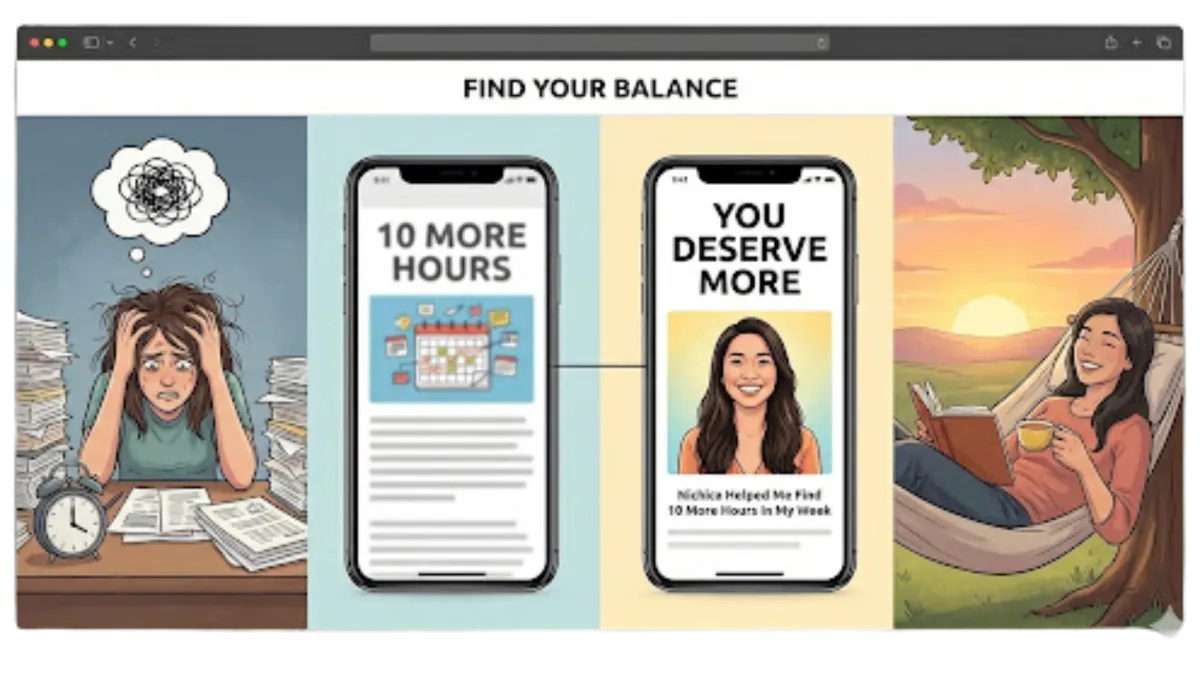
I call it the SPACE Framework
By breaking down the key components of a successful and productive lifestyle into a framework that is simple to understand and implement, I was able to:
Recognize stress before it became too much
Prioritize what was most important to me
Create and maintain balance in my life
Set clear expectations for myself
Celebrate myself consistently
Accomplish my goals in a realistic time frame that made sense for my lifestyle
After helping numerous other high level women replicate these results, I've refined this system into a step-by-step method that anyone can use...
...even if nothing else has worked before. And it starts with my Ebook.
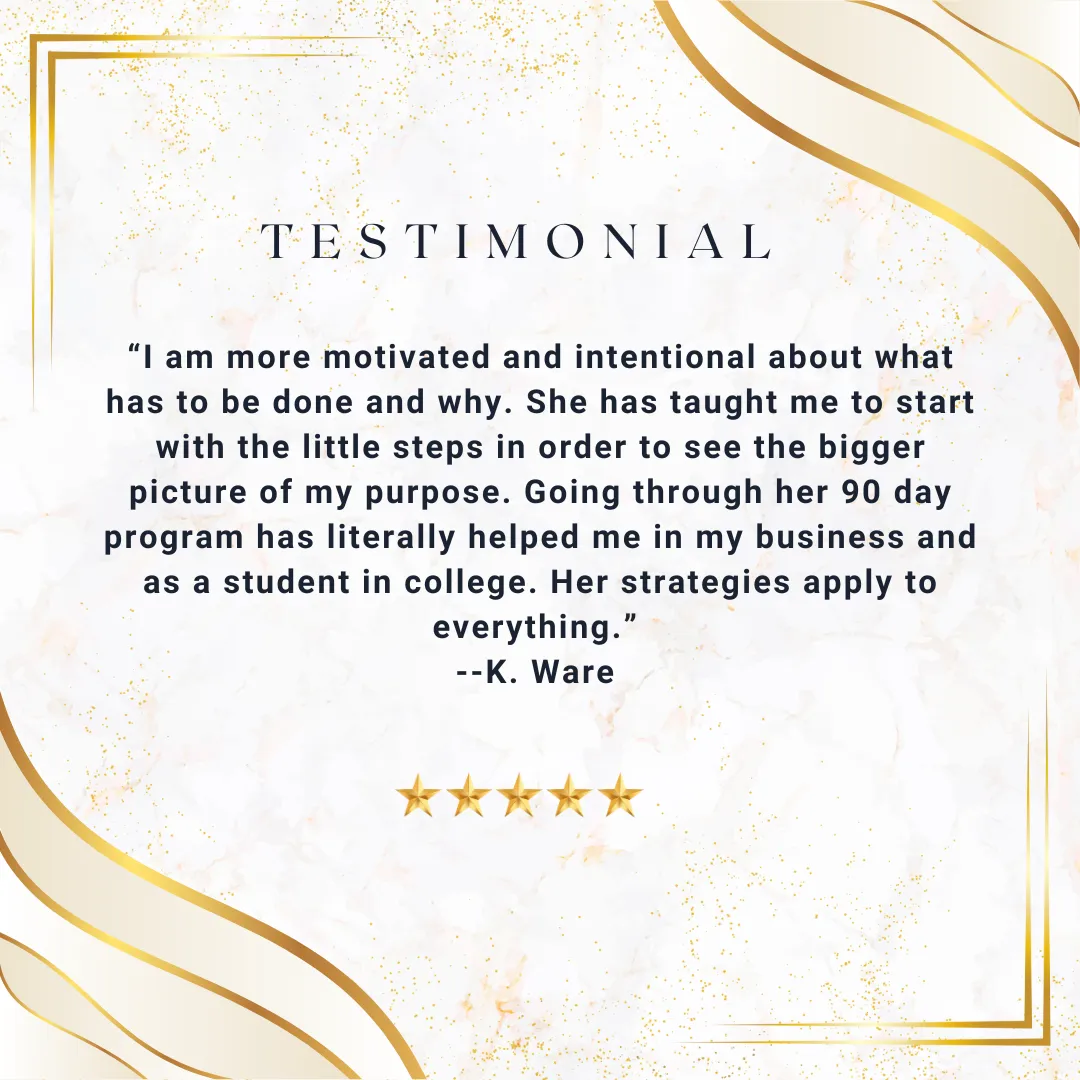
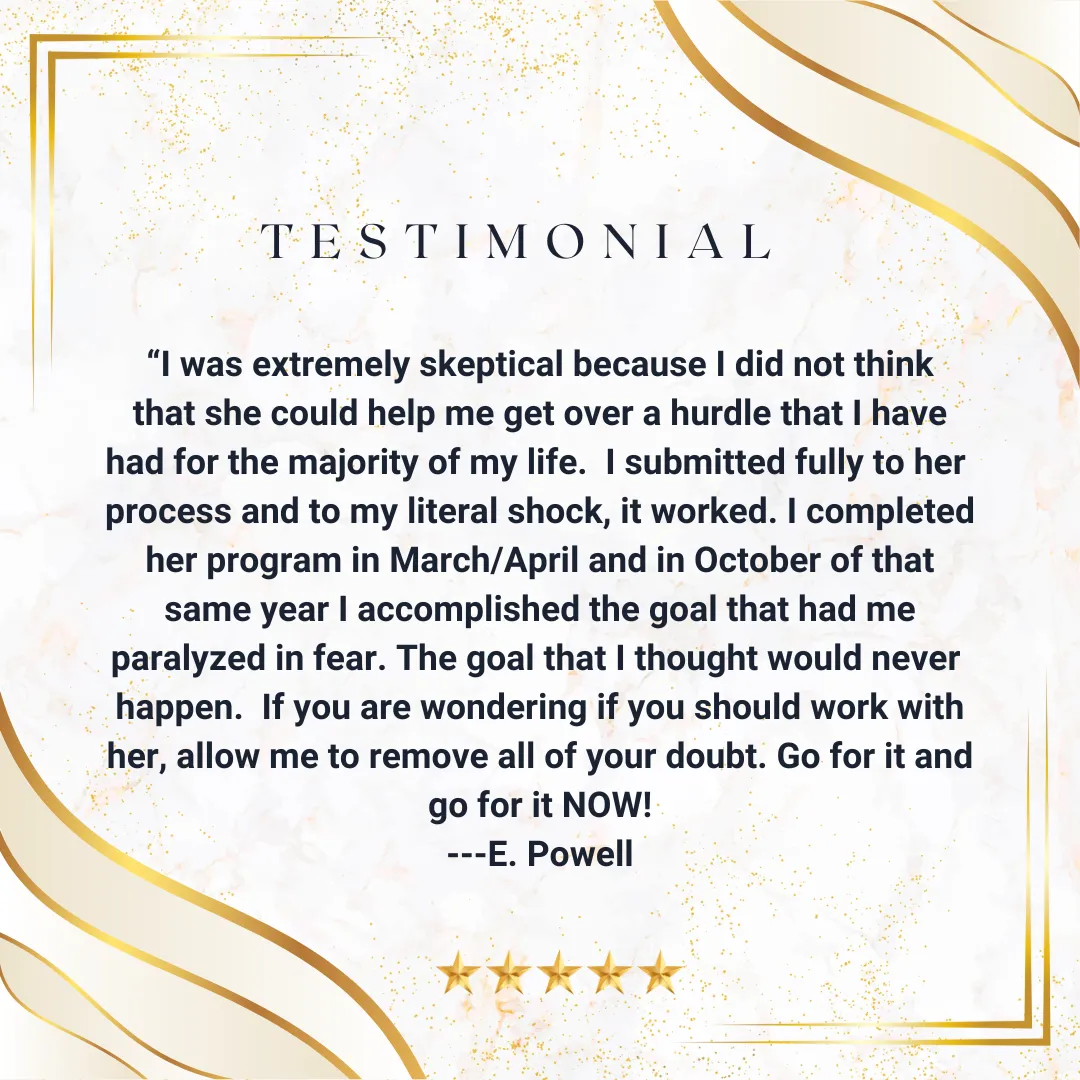
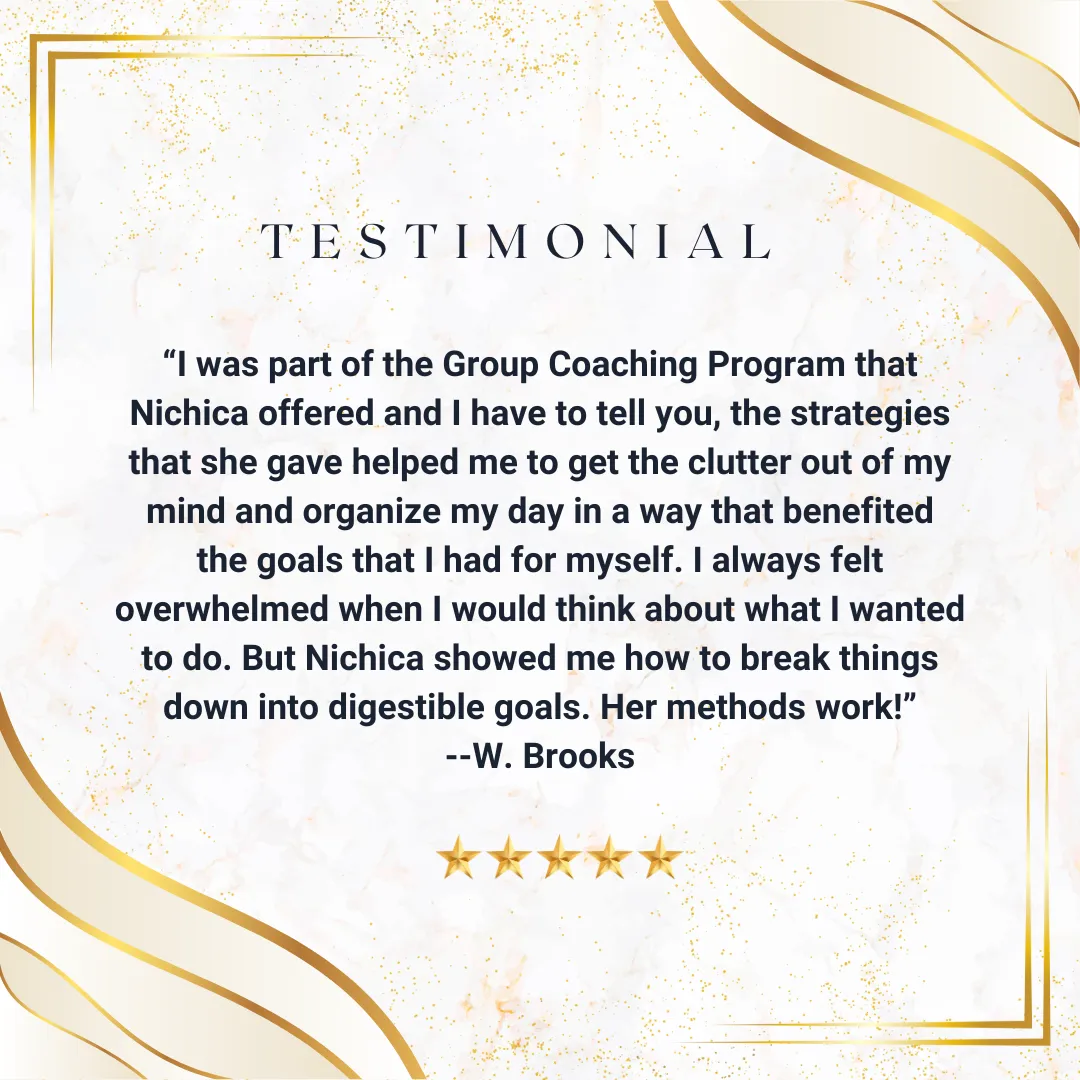
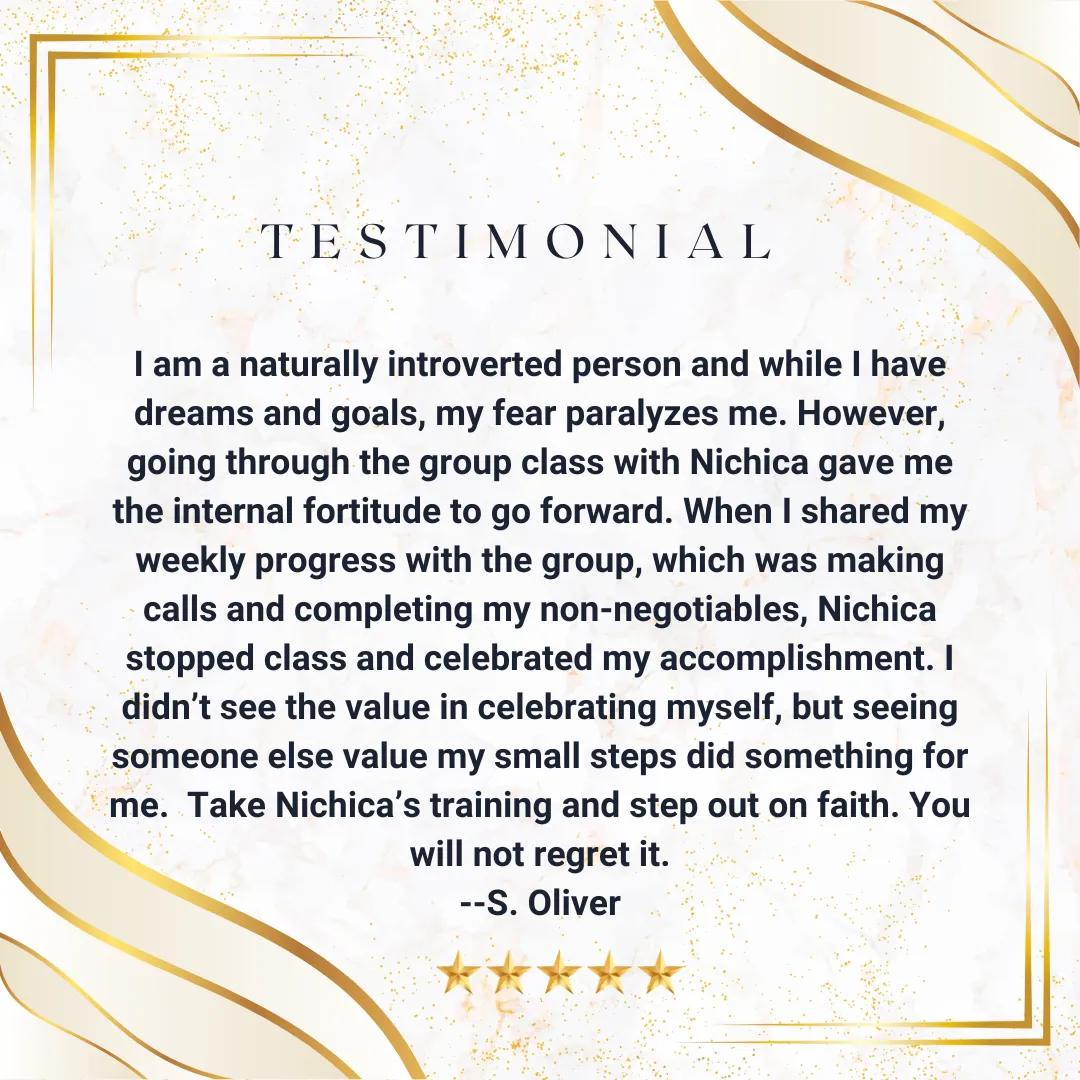
But don't take my word for it. Listen to these HAPPY CLIENTS:
The 4 Essential QUALITIES/SKILLS Required To Have Continued Success NO MATTER WHAT!
CONSISTENT:
What it means: Showing up in small, steady steps rather than waiting for motivation, perfection, or the “right time.”
Why it's important: Real change happens through repetition — momentum builds when YOU practice the new habits long enough for them to stick.
Without it: You start strong, burns out quickly, and ends up feeling like nothing works for you, reinforcing failure and frustration.

TEACHABLE:
What it means: Being open to guidance, new strategies, and a different way of operating.
Why it's important: My method only works when you are willing to UNLEARN habits that keep you overwhelmed and replace them with what actually creates peace and productivity.
Without it: You stay stuck in the same exhausting patterns, insisting on doing everything your old way — never breaking the cycle that’s draining you.

OPEN TO REDEFINING SUCCESS:
What it means: Being willing to shift from achievement-driven identity to a lifestyle that honors clarity, peace, and purpose.
Why it's important: Without redefining success, you will always default back to overworking, over giving, and overscheduling yourself.
Without it: You become trapped in a life that looks impressive but feels empty — constantly chasing validation instead of living with intention.
STRATEGIC RELEASE:
What it means: Loosening the grip on perfection and the belief that you has to manage every detail yourself.
Why it's important: Productivity becomes simpler and more sustainable when you trust systems, boundaries, and support instead of relying solely on your will power.
Without it: You continue micromanaging your life, creating exhaustion, resentment, and a daily workload that never truly lightens.

Facebook
Instagram
LinkedIn
Youtube